|
|
LED Lighting
the lighting of the future
By:
Jonathan Z. Kremer
June 11, 2007
Practically everyone has heard of the new LED bulbs that are coming out
lately,
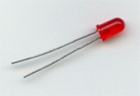 but
few know exactly what they are or what makes them different from other bulbs. In
short, Light Emitting Diodes (LED) are bulbs without a filament, that are low in
power consumption and have a long life span. but
few know exactly what they are or what makes them different from other bulbs. In
short, Light Emitting Diodes (LED) are bulbs without a filament, that are low in
power consumption and have a long life span.
A Little History
In 1907, a British experimenter, H. J. Round, was the
first to report of a light-emitting solid-state diode. Unfortunately, this
discovery produced no practical use for many decades. In the 1970s LED indicator
lights started to become commercially available for use in appliances such as
TVs, radios, and telephones. Although these LEDs were bright enough to use as
indicators, they were not able to illuminate an area. As the technology started
to advance, the light output of LEDs increased, and have now become bright
enough to be used for illumination.

Today, LED technology has provided us with LEDs which can be used in many
lighting applications. We have LED flashlights, headlights, boat lights, and you
can find many types of LED bulbs to replace the bulbs you have in your home.
How Are LEDs Different From a Regular
Incandescent Bulb?
As we mentioned above, unlike ordinary incandescent bulbs, LEDs do not have a
filament that will burn out, and they don't get especially hot. They are special
diodes that emit light when connected in a circuit. They are illuminated solely
by the movement of electrons in a semiconductor material, and they last as long
as a standard transistor.
For a more technical explanation go here:
http://electronics.howstuffworks.com/led1.htm

More About LEDs
LED light bulbs give off directional light, which means that the light goes
where the bulb is pointing. LEDs are closer to the color of daylight than
incandescent bulbs, with an excellent
"Color Rendering Index" of around 85. They are about 5 times more
energy-efficient than
florescent bulbs, and can last up to 10 times as long.
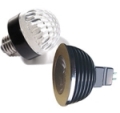 LEDs are just starting to rival conventional lighting, but unfortunately they
just don't have the output (lumen) needed to completely replace incandescent,
and other type, bulbs just yet. Being relatively new, the price of LED lighting
is still high enough to discourage many homeowners. Never the less, technology
is advancing everyday, and it will not be long until the LED bulb will be the
bulb of choice for most applications in the home and work place.
LEDs are just starting to rival conventional lighting, but unfortunately they
just don't have the output (lumen) needed to completely replace incandescent,
and other type, bulbs just yet. Being relatively new, the price of LED lighting
is still high enough to discourage many homeowners. Never the less, technology
is advancing everyday, and it will not be long until the LED bulb will be the
bulb of choice for most applications in the home and work place.
Jonathan Z. Kremer (better known as Yoni) is the proprietor of
"Yoni - Electrical Design and Installations", a Maale Adumim (Israel) based business that has been serving primarily Jerusalem, Maale Adumim, and surrounding areas since 1989. We undertake various forms of electrical work including renovations, maintenance, installations, and repairs - encompassing the domestic (home), industrial and commercial arenas. We believe that our success tomorrow will be determined by how well we serve you today.
http://www.yoni.kremer.co.il
|


